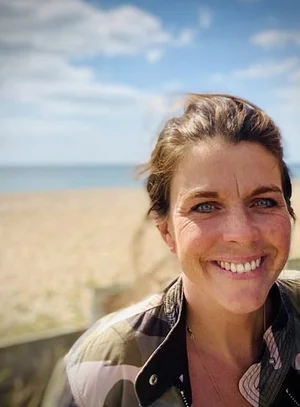
I left the NHS but I couldn’t leave this behind.
I don’t think The Birth Recovery Project began when I gave it a name. I think it has been quietly forming for years.
I have worked alongside women and families in the birth world for over 16 years. Over that time, my work has taken many forms, eventually leading me into midwifery and roles across community maternity care, home birth, birth centres, continuity of care, leadership and, ultimately, specialist work around Birth Stories and trauma-informed care. For much of that time, my focus was understandably on birth itself. Preparing women for it. Supporting them through it. Protecting physiology where we could. Advocating for choice and informed decision making. Trying to create maternity care that saw the woman in front of us rather than simply moving her through a system. Then my work shifted increasingly towards what happens afterwards and that has changed everything.
I began spending much more time sitting with women after birth. Not during the emergency. Not while decisions were being made or the room was full of people. Afterwards. Sometimes weeks later, sometimes months later, when everyone else had moved on and the woman was only just beginning to understand what the experience had done to her. Through my Birth Stories and trauma-informed work within the NHS, I listened to hundreds of women trying to make sense of their births. Some wanted answers, for others they wanted to understand why particular decisions had been made. Some needed to know whether what happened had been unavoidable. Others barely cared about the clinical detail at all. They wanted somebody to understand why a moment that might have occupied three lines in their maternity notes had changed something fundamental inside them. The more women I listened to, the more uncomfortable I became with what happened next. Often, there wasn’t a next.
There was the conversation. Perhaps an explanation. Sometimes an apology. Perhaps a referral if a woman was experiencing significant mental health difficulties and met the threshold for specialist support but for a huge number of women, that was it. They weren’t necessarily mentally unwell, not always experiencing PTSD and not yet in crisis but neither were they OK. Living in a grey area that our maternity and mental health systems do not seem particularly well designed to hold. I started to wonder just how many women were living there.
The women in the middle
We understandably talk about birth trauma and perinatal mental illness. Specialist services for women experiencing significant mental health difficulties are essential. Somewhere in those conversations, we can end up with two groups of women: those who are well and those who are unwell enough to need specialist care. My experience has taught me that there is an enormous amount of life in between. There is the woman who gets up every morning, looks after her baby, goes to work, meets friends and appears completely functional, but still avoids driving past the hospital where she gave birth. There is the woman who tells everyone her birth was fine because her baby was fine, while privately wondering why she cries whenever somebody else announces a pregnancy. The woman whose birth was not considered clinically traumatic but who came away feeling powerless, frightened or completely disconnected from her body. The woman who cannot stop wondering whether she made the wrong decision. The woman who was listened to too late. The woman whose emergency was managed brilliantly but who still thought she was going to die. The woman who doesn’t want a diagnosis. She just wants somebody to help her make sense of what happened.
There are women who might never use the words birth trauma at all. They simply know that something has not felt quite right since they gave birth. That, increasingly, is the space I am interested in. Not only birth trauma but Birth recovery.
Working inside the gap
Working in a specialist birth trauma role within the NHS was an enormous privilege. It also allowed me to see the limitations of what we currently offer very close up. I could sit with a woman. I could listen. I could help her understand her maternity notes and piece together what had happened. I could explain the clinical context and help her understand why decisions had been made. I could validate that an experience could have been deeply frightening even when the outcome was considered clinically good. Sometimes simply being properly heard was incredibly powerful. I also became increasingly aware that we were often asking women to fit themselves into the services we had, rather than asking what support women actually needed.
A birth debrief can be important.
Specialist perinatal mental health care can be essential.
Psychological therapy can be transformative.
But what about everything between those things?
Where is the recovery pathway?
Where is the space to understand why your body still reacts when your mind knows you are safe. To rebuild trust in a body that suddenly feels unfamiliar. To talk about anger, grief, identity, physical recovery, relationships, feeding, motherhood or the strange contradiction of loving your baby while struggling deeply with how they arrived. Where is the support that says you don’t have to be mentally ill for this to have affected you. I don’t think we have paid enough attention to that part. Eventually I couldn’t stop seeing it.
Then women’s healthcare became personal
At the same time, my own relationship with women’s healthcare was changing. After years of living with adenomyosis and endometriosis, I eventually had a hysterectomy. I had also experienced premature ovarian insufficiency from my late thirties. For around nine years, I knew something wasn’t right and yet even as a healthcare professional working within women’s health, I experienced what it is like to repeatedly present symptoms and not have the whole picture recognised. That experience changed something in me.
My experience is not the same as the experiences of women I have supported after birth, and I would never pretend that it is. However it has given me a different understanding of what happens when a woman knows something about her own body and experience, yet the system around her does not quite know where to put it. There is something profoundly destabilising about that. It made me think again about all the women who had sat opposite me over the years and said some version of the same thing.
I knew something wasn’t right.
Healthcare systems can be very good at recognising pathology. They can be much less good at recognising the enormous territory between nothing is clinically wrong and this woman is well.That territory exists throughout women’s health and it absolutely exists after birth.
Leaving the NHS gave me enough distance to see it
Eventually, I left the NHS. It was a huge decision. I had spent a long time trying to create change from inside maternity services. I had led teams and services, developed trauma-informed work and worked alongside extraordinary midwives and maternity staff trying to provide compassionate care within a system under enormous pressure. I had reached a point where I needed to understand what my work could look like outside of the structures I had spent so long working within.
Something interesting has happened when I stepped outside. I can see the gaps more clearly. Through my private work as The Alternative Midwife, I continue to see women for birth debriefing and trauma-informed recovery work. Now I have something that is incredibly difficult to find within overstretched services. Time.
We can spend 90 minutes or two hours together. We can go back through a birth slowly. We can talk about what happened clinically, but also about what happened emotionally. We can identify the moments that still felt stuck. We can talk about the nervous system and why seemingly small things could suddenly bring everything flooding back. We can work with breathing, grounding, guided imagery and, where appropriate, Rewind work.
I have watched women change sometimes remarkably quickly within on session. A woman could arrive carrying a story she had replayed hundreds of times and leave understanding it differently. Not forgetting it or having the difficult parts polished away. Just feeling less controlled by what had happened. That work has reinforced something I believe very strongly - women can recover from difficult and traumatic birth experiences. This has has also left me with another increasingly uncomfortable question - What about everybody who cannot pay for me?
Helping one woman matters but it isn’t enough.
Private practice allows me to do beautiful, meaningful work. I can sit opposite one woman and give her the time she needs. I can work in a way that is flexible, individual and human. I can see the difference that relatively early, relatively simple support can sometimes make but private practice has an obvious limitation. It helps the woman who finds me and who can afford to pay for it. It does not change what happens to women on a larger scale. I don’t want my response to recognising this gap to be simply building a bigger private practice. The more effective I see this work being, the more strongly I feel that access to meaningful birth recovery support should not depend on whether a woman happens to have the money to buy it. So I keep coming back to the same question - What would happen if birth recovery support was simply available?
What if there were somewhere to go in that grey area? Somewhere between routine postnatal care and specialist mental health services. That understood that recovery after birth can be physical, psychological, emotional, relational and physiological all at once. Somewhere that did not require a woman to prove she was ill before she was allowed support.
That question has become The Birth Recovery Project.
From seeing the gap to building something different
The Birth Recovery Project is still at the beginning and I want it to be. I have spent enough time working inside healthcare to know that women do not need another service designed for them in a room they were never invited into. So the first part of this project has to be listening. I want to hear from women who struggled after birth, but also women who recovered well. Women who received brilliant support and women who found nothing. Women who accessed specialist services and women who would never have considered themselves unwell enough to do so.
What helped? What was missing? When did they need it? What did recovery actually look like? If we could build something different, what should it be?
From there, the project is beginning to form around three connected strands.
LISTEN. SUPPORT. TRAIN.
LISTEN means putting women’s voices and lived experience at the centre of understanding birth and postpartum recovery.
SUPPORT means developing accessible, trauma-informed recovery support for women who may not need specialist mental health services but still need somewhere to go. Individual support, facilitated groups, recovery work, resources and community.
TRAIN is where I believe this could become something much bigger than my own work.
My vision is to develop a network of Birth Recovery Champions. Appropriately experienced professionals who receive specialist training, supervision and support through The Birth Recovery Project and who are then funded through the project to work within their own local communities. Not trained and sent away to create another private service. Funded to provide the support. They could facilitate recovery groups, provide individual support, help women understand what they are experiencing and recognise when somebody needs referral into more specialist care. Local people providing local support, connected through a wider national project.
I want us to build something capable of reaching thousands.
Maybe women aren’t being missed
For a long time, I thought about the women I met after difficult births and wondered why so many were being missed. I am beginning to think missed might be the wrong word because these women are everywhere. We see them at postnatal appointments. At baby groups. At work. At school gates. In GP surgeries. On maternity wards having their next babies. In our friendship groups and families. They are not invisible. The problem is not that we have failed to see them the support they need simply isn’t there.
There is an enormous grey area of birth and postpartum recovery that sits between routine maternity care and specialist mental health services and I believe that is where a significant number of women are. Functioning. Mothering. Carrying on. What about all the women in the middle? I think it is time we found out what they need and built it with them.